The portal your stockists open every day.
An order form is visited when there’s an order. A bride book — measurements, fittings, gowns and dates — is where a boutique runs its day. That difference is the point.
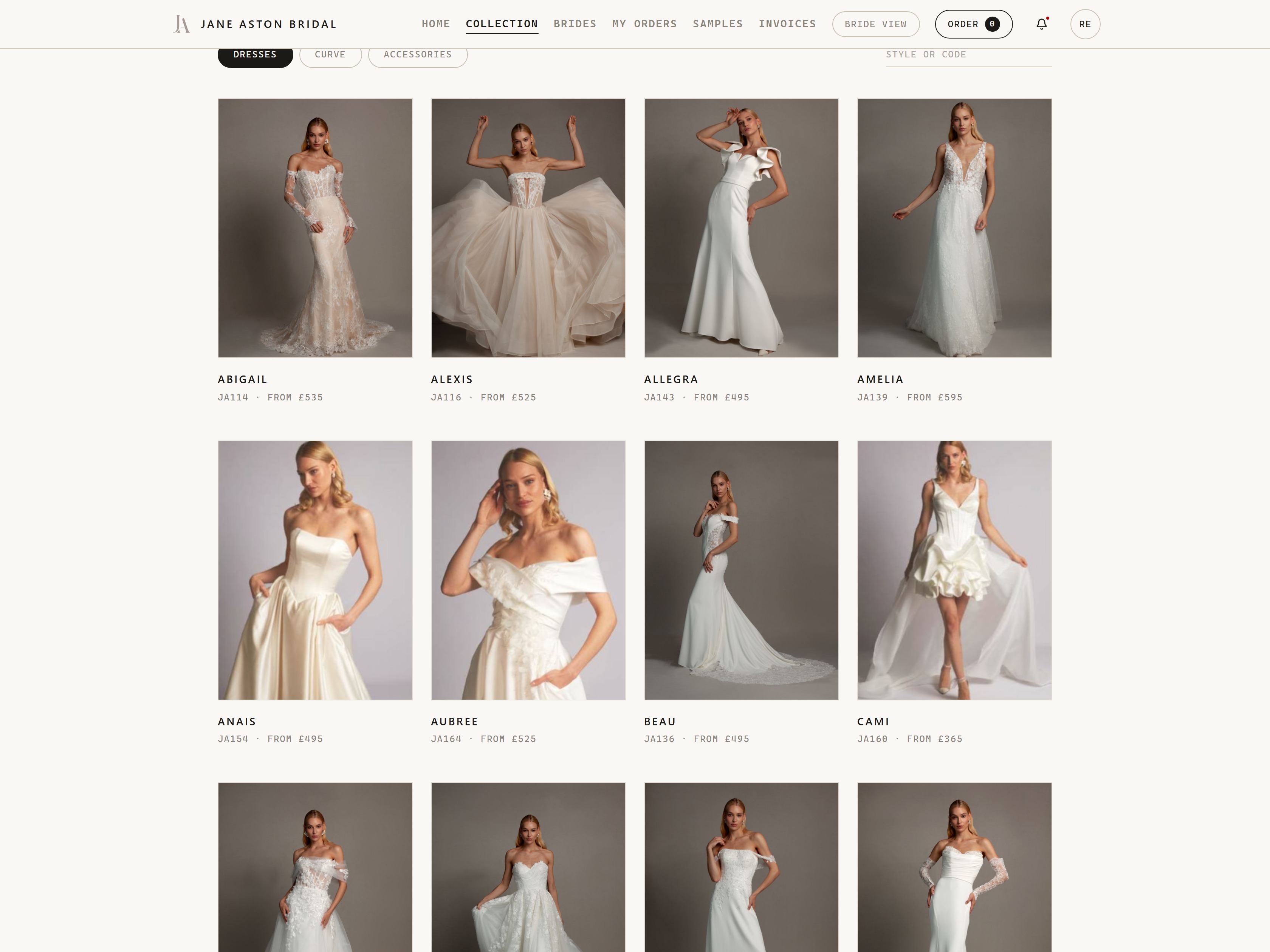
Why stockist adoption is the real feature.
Every portal demo looks good to the label. The question is whether boutiques come back on a wet Tuesday.
Bride measurements and fitting notes live in diaries and heads — disconnected from the orders they belong to.
A bride in the fitting room, a size chart on the wall, a judgement call. Fit Finder turns her measurements into a recommendation from your actual chart.
The gown they ordered three times last season should be one click, not a fresh configuration.
A record per bride, a book per boutique.
Owned by the stockist, walled off from every other stockist, useful to both of you.
Contact details, wedding date, measurements and status — created automatically as orders are placed, or ahead of time as an enquiry.
A dated log of fittings and alterations against each bride, so the gown’s whole history lives in one place.
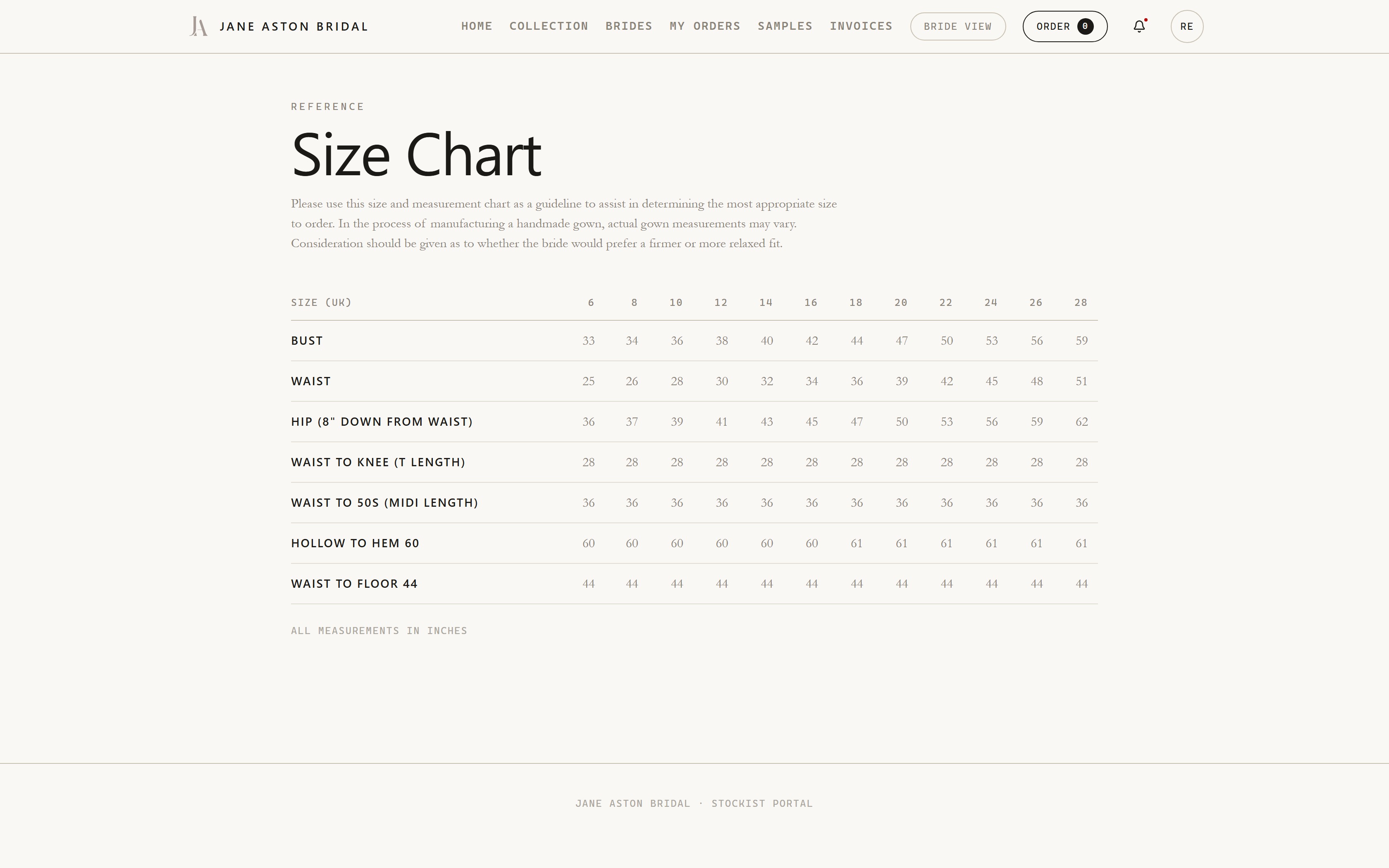
Her saved measurements against your size chart — recommending the size, split sizing or made-to-measure route that actually fits.
Any past order rebuilds into a fresh basket at current prices, and the sample rail shows what’s already on their floor.
The book fills itself in
Nobody maintains a CRM for its own sake — so the bride book grows as a side effect of ordering. Place a bride order and her record is created or matched automatically from her name and wedding date; her measurements arrive when Fit Finder is used; her gown links itself. The boutique gets a complete book without doing admin, and comes back to the portal because their working record is in it.
Whose data is it?
The stockist’s. Each boutique sees only its own brides, and other boutiques never see them at all — enforced in the database on every request. Your studio can view bride records across stockists for support, but never edits a boutique’s book. Bride data is used for making and fulfilling orders, and nothing else.
Adoption is a retention strategy
A label’s portal succeeds when stockists prefer it to the old way. The bride book, one-click reorder, live order timelines and their own invoice statements make the portal the easier path — and a boutique whose working book lives in your portal is a boutique that orders from you first.
Jane Aston Bridal runs its wholesale on Labels.io — 100+ styles, stockists ordering on her own domain, and a factory connected by email.
Read the case study →Questions, answered.
See it with your own collection.
Book a demo and we'll walk through your catalogue, show you the portal your stockists would use, and give you a firm quote.
Book a demoFor bridal labelsYour bride book (docs)Wedding-date protection